
X-Course on Climate, Culture and Biodiversity
- Interwoven Challenges in a Changing World
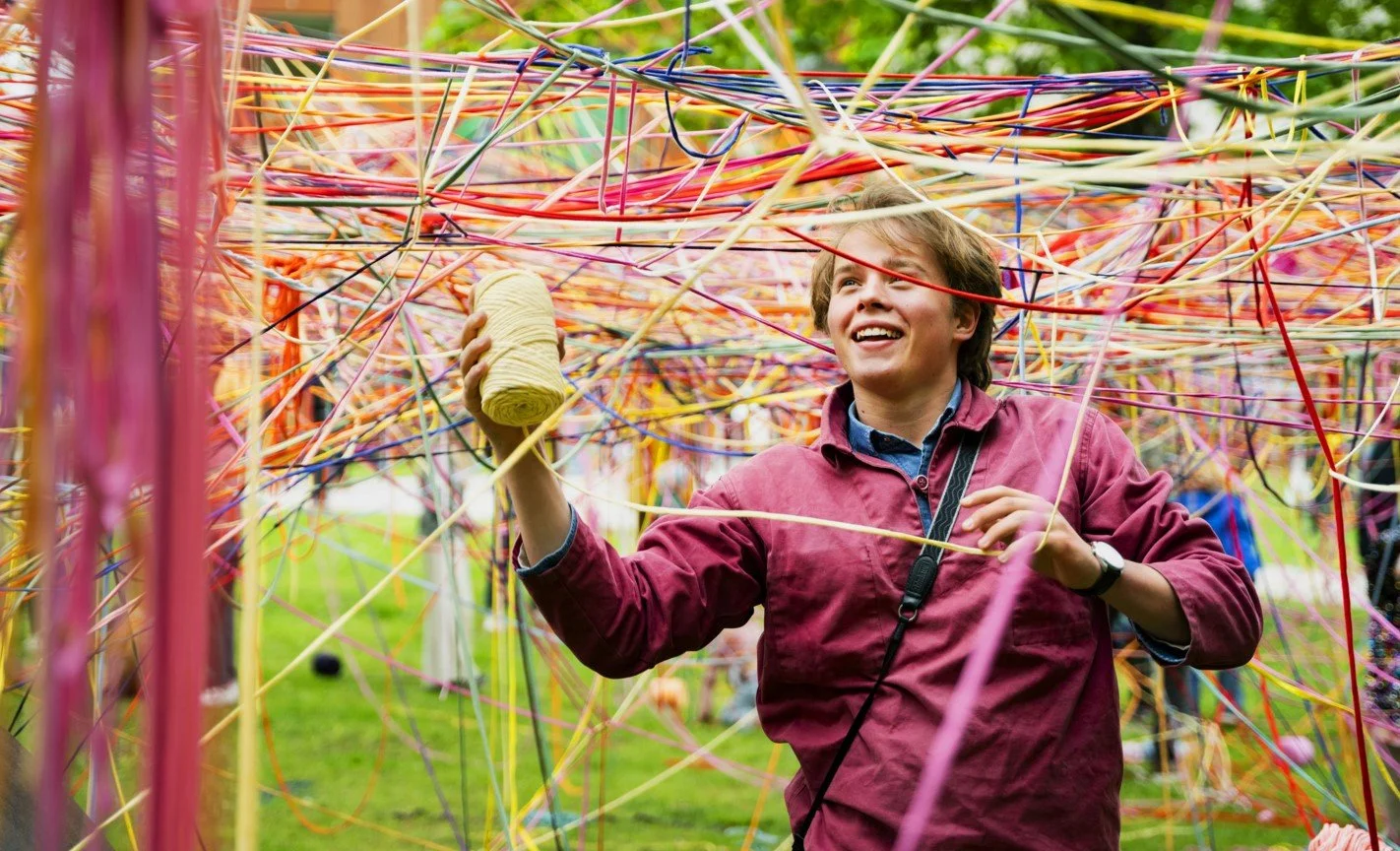
Image from an art project in the park of the Museum of Artistic Process and Public Art, Lund.
In January-March 2026, the first cohort of students at Lund University will take partof this new 3-credits X course, inspired by the capacity building efforts in Mistra BIOPATH and led by WP 1 leader Johanna Alkan Olsson.
The course focusses on the intersection between biodiversity, climate change and culture. The main goal is to provide students with knowledge about biodiversity and its multiple values the main causes to its loss. The students will also learn how artistic expressions can be used as strategic tools to understand, communicate, problematise and contribute to solutions that decrease the threat against biodiversity and develop a smaller project using an artistic expression. The Botanical garden, Skissernas museum and the Historic museum in Lund are involved in the course.
Course objectives
The overall objective of the course is that, upon completion, students will have knowledge of the causes of biodiversity loss and the multiple values of nature, as well as a basic understanding of the links between climate change and biodiversity loss.
Students should also be able to analyse and apply cultural and artistic expressions as strategic tools for communicating, problematising and contributing to solutions to the threat to biodiversity, and relate these strategic tools to other methods aimed at solving the biodiversity crisis.
Knowledge and understanding
Upon completion of the course, the student should be able to:
explain what biodiversity is and, at a general level, explain its multiple values
identify human processes that directly or indirectly threaten biodiversity
explain, at a general level, the causal relationship between climate change and biodiversity
describe strategies and measures that various actors have developed to address the biodiversity crisis
explain and exemplify how cultural and artistic processes can be used as strategic tools to communicate complex environmental issues, challenge prevailing norms and values, and transform humanity's approach to global environmental problems, with a particular focus on the threat to biodiversity
Skills and abilities
Upon completion of the course, students should be able to:
plan and implement a project with a clear target group and purpose, using cultural and artistic tools to communicate, problematise and influence our approach to biodiversity
present the project in a structured and engaging way, argue for its relevance and potential, and relate it to the theories and concepts of the course
actively receive and give constructive feedback on others' projects, focusing on content and form, and reflect on how the feedback can be used to improve their own work
Judgement and approach
Upon completion of the course, students should be able to:
critically reflect on the ethical, social and economic dimensions of human impact on biodiversity and climate
identify and analyse ethical dilemmas that may arise in relation to the use of artistic processes in relation to society's opportunities for change
Course content
The course explores the roots of the biodiversity crisis and its relationship to climate change, emphasising the potential of cultural and artistic narratives to communicate, challenge and transform our responses to this crisis. By integrating the perspectives of different people and social actors, the course examines current social and cultural dependencies on biodiversity as a resource for materials, food and human culture, as well as how we are affected by biodiversity loss and climate challenges around the world. Central to this exploration is the role of culture and art, including literature and film, as powerful tools for deepening our understanding of humanity's connection to and view of the natural world.
The course consists of three modules. The first module covers key concepts and principles related to biodiversity and the relationship between biodiversity and climate. In the second module, the principles are applied in practice through games, excursions and seminars. In the third sub-course, students plan and carry out a project in small groups that uses cultural and artistic narratives to communicate, problematise and influence human attitudes towards biodiversity.
Teaching consists of lectures, games, excursions, seminars and a project assignment. Participation in excursions, exercises, seminars and project assignments is compulsory.